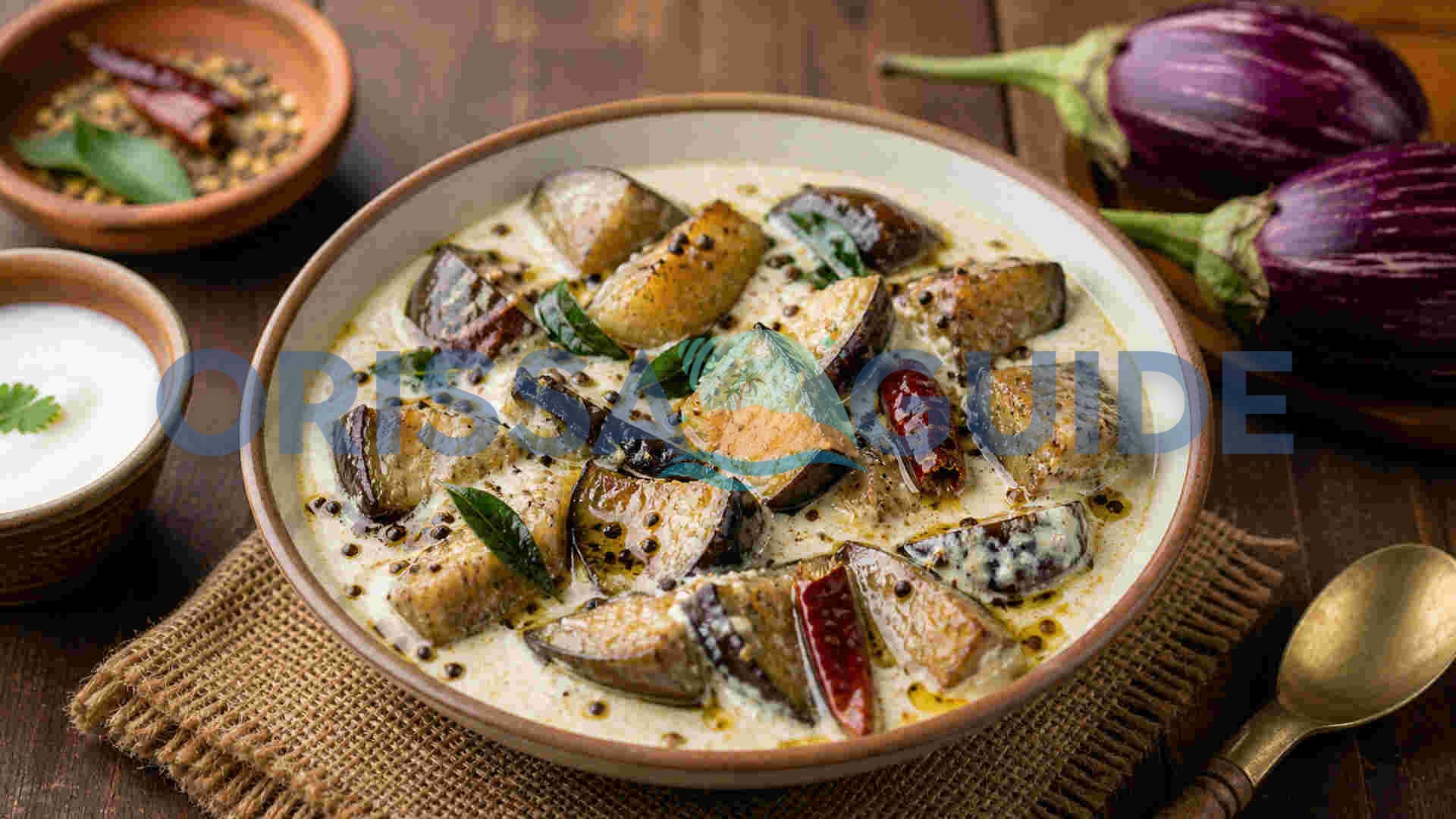
Indian cuisine is often associated with bold spices, rich gravies, and complex cooking techniques. However, if you explore regional cuisines more closely, you’ll discover that some of the most satisfying dishes are the simplest ones. Dahi Baigana is a perfect example of this philosophy.
Originating from the eastern state of Odisha, Dahi Baigana is a dish that beautifully combines everyday ingredients—brinjal (eggplant) and yogurt—into something deeply comforting and flavorful. It is a dish that doesn’t rely on heavy spices or elaborate preparation. Instead, it focuses on balance, freshness, and subtlety.
What makes this dish truly special is its ability to deliver multiple flavor dimensions at once. The soft, slightly smoky brinjal pairs effortlessly with the cool, tangy yogurt, while the tempering of spices adds a layer of aroma and warmth. The result is a dish that feels light yet satisfying, simple yet sophisticated.
For many Odia households, Dahi Baigana is more than just a side dish. It is part of everyday meals, festive thalis, and even temple-style cooking. It carries a sense of familiarity and nostalgia, often reminding people of home-cooked meals shared with family.
What is Dahi Baigana?
At a basic level, Dahi Baigana is a preparation where fried or sautéed brinjal is combined with a seasoned yogurt base. However, this simple description does not fully capture the essence of the dish.
In Odia cuisine, Dahi Baigana is often categorized under “khatta” dishes, which are known for their tangy flavor profile. These dishes are designed to balance the overall meal, especially when paired with heavier or spicier items.
Breaking Down the Components
- Dahi (Yogurt): Provides tanginess, creaminess, and a cooling effect
- Baigana (Brinjal): Adds a soft, slightly smoky texture and earthy flavor
When combined, these ingredients create a dish that is both refreshing and deeply satisfying.
A Dish with Multiple Interpretations
Interestingly, Dahi Baigana does not have a single fixed recipe. Different households prepare it in slightly different ways:
- Some prefer a thicker yogurt base, similar to raita
- Others make it slightly more fluid, almost like a light curry
- Some versions include a tempering of spices, while others keep it minimal
This flexibility makes Dahi Baigana a versatile dish that adapts to personal taste and occasion.
Why Dahi Baigana Holds a Special Place in Odia Cuisine
A Perfect Balance of Taste and Texture
One of the most remarkable aspects of Dahi Baigana is its balance. It is not overly tangy, not too spicy, and not too rich. Instead, it sits comfortably in the middle, offering a harmonious blend of flavors.
The creamy yogurt coats the soft brinjal pieces, while the tempering adds a subtle crunch and aroma. Each bite delivers a mix of textures and flavors that feel both light and satisfying.
A Cooling Dish for Warm Climates
Odisha experiences a warm and humid climate for much of the year. Dishes like Dahi Baigana are naturally suited to such conditions.
The yogurt base:
- Helps cool the body
- Aids digestion
- Provides hydration
This makes the dish especially popular during summer months, when lighter meals are preferred.
Strong Cultural and Religious Significance
Dahi Baigana is deeply embedded in Odia traditions.
It is commonly:
- Served during weddings and festive meals
- Included in temple-style cooking
- Prepared during religious occasions
Since it is often made without onion and garlic, it aligns well with satvik cooking practices, which are followed during spiritual events.
Simplicity That Reflects a Larger Philosophy
Odia cuisine is known for its restraint and balance, and Dahi Baigana embodies this perfectly.
Instead of relying on:
- Heavy spices
- Excessive oil
- Complex techniques
It focuses on:
- Fresh ingredients
- Gentle cooking
- Natural flavors
This approach makes the dish not only delicious but also meaningful.
Ingredients Required for Dahi Baigana
Brinjal (Eggplant)
Brinjal is the heart of this dish. Choosing the right type is important:
- Small to medium-sized brinjals work best
- Fresh, firm brinjals ensure better texture
- Avoid overly seedy or soft ones
When cooked properly, brinjal becomes soft and creamy, absorbing flavors beautifully.
Curd (Yogurt)
The quality of curd can make or break the dish.
- Use fresh, slightly tangy curd
- Avoid overly sour yogurt
- Whisk well for a smooth texture
Curd provides:
- Creaminess
- Tanginess
- Cooling properties
Spices and Seasonings
The spice profile is intentionally mild:
- Turmeric: Adds color and subtle earthiness
- Cumin powder: Provides warmth and aroma
- Chili powder or green chilies: Adds mild heat
- Salt and black salt: Enhance flavor
- Sugar (optional): Balances tanginess
Tempering Ingredients
Tempering is what elevates the dish:
- Mustard oil
- Panch phoron
- Curry leaves
- Dried red chilies
This step adds depth and aroma, making the dish more complex without overpowering it.
Step-by-Step Recipe
Step 1: Preparing the Brinjal
Wash and cut the brinjal into evenly sized pieces.
Lightly coat them with turmeric and salt. This step:
- Enhances flavor
- Reduces bitterness
- Helps in even cooking
Let them rest briefly before cooking.
Step 2: Frying or Sautéing the Brinjal
Heat mustard oil and cook the brinjal pieces until soft and slightly golden.
This step is crucial because:
- It develops flavor
- Adds a mild smokiness
- Improves texture
Avoid over-frying, as the brinjal may become too oily or mushy.
Step 3: Preparing the Yogurt Base
Whisk the curd until smooth and lump-free.
Add:
- Salt
- Sugar (if using)
- A little water
The consistency should be creamy but not too thick.
Step 4: Preparing the Tempering
Heat oil and add panch phoron, curry leaves, and chilies.
Allow them to crackle and release their aroma. This step:
- Enhances flavor
- Adds complexity
- Brings authenticity
Step 5: Combining the Dish
- Add the cooked brinjal to the yogurt base.
- Pour the tempering over it and gently mix.
- Let it sit for a few minutes so the flavors blend together.
Step 6: Final Touch and Serving
- Sprinkle cumin powder and garnish with coriander leaves.
- Serve at room temperature or slightly chilled.
Tips to Make Perfect Dahi Baigana
- Always use fresh curd
- Avoid mixing hot brinjal directly into cold yogurt
- Maintain a balance between sweet, sour, and spicy
- Let the dish rest before serving
- Use mustard oil for authentic flavor
Variations of Dahi Baigana
- Raita-Style Version: Quick and simple, ideal for everyday meals.
- Curry-Style Version: Slightly cooked yogurt base for a richer texture.
- Healthy No-Fry Version: Roasted or air-fried brinjal reduces oil content.
- Festival Satvik Version: Prepared without onion and garlic.
- Regional Adaptations: Different regions tweak spices and textures.
Nutritional Benefits of Dahi Baigana
- Supports Digestive Health: Curd contains probiotics that improve gut health.
- Low-Calorie and Weight-Friendly: Light preparation makes it suitable for balanced diets.
- Rich in Fiber: Brinjal aids digestion and promotes satiety.
- Cooling and Hydrating: Ideal for summer due to yogurt base.
What to Serve with Dahi Baigana
- Steamed rice
- Pakhala Bhata
- Dal
- Simple vegetable dishes
It acts as a refreshing contrast in a meal.
Conclusion
Dahi Baigana is a dish that proves simplicity can be powerful. It doesn’t rely on elaborate techniques or heavy ingredients, yet it delivers a deeply satisfying experience.
It represents the heart of Odia cuisine—balanced, mindful, and rooted in tradition. Whether you are exploring regional Indian dishes or looking for a light, healthy option, Dahi Baigana is a perfect choice.