Introduction
In the vast and diverse landscape of Indian cuisine, every region tells its own story through food. Some dishes are loud, rich, and layered with spices, while others are subtle, comforting, and rooted in simplicity. Khasi Manso Jhol belongs to the latter category—a dish that may appear humble at first glance but carries within it generations of culinary wisdom and cultural identity.
Odisha, a state known for its temples, traditions, and coastal beauty, has a cuisine that mirrors its lifestyle—balanced, uncomplicated, and deeply connected to nature. Khasi Manso Jhol is a perfect reflection of this philosophy. It is not just a mutton curry; it is a representation of how Odia households approach cooking—with patience, minimalism, and respect for ingredients.
Unlike the rich, oil-heavy mutton gravies commonly found in North Indian or Mughlai cuisine, this dish is light, brothy, and soothing. It does not rely on excessive spices or cream to create flavor. Instead, it builds taste slowly, allowing the natural richness of mutton to shine through.
For many Odia families, Khasi Manso Jhol is more than food—it is comfort. It is the dish served on relaxed Sunday afternoons, shared during family gatherings, and remembered with nostalgia by those living away from home.
What is Khasi Manso Jhol?
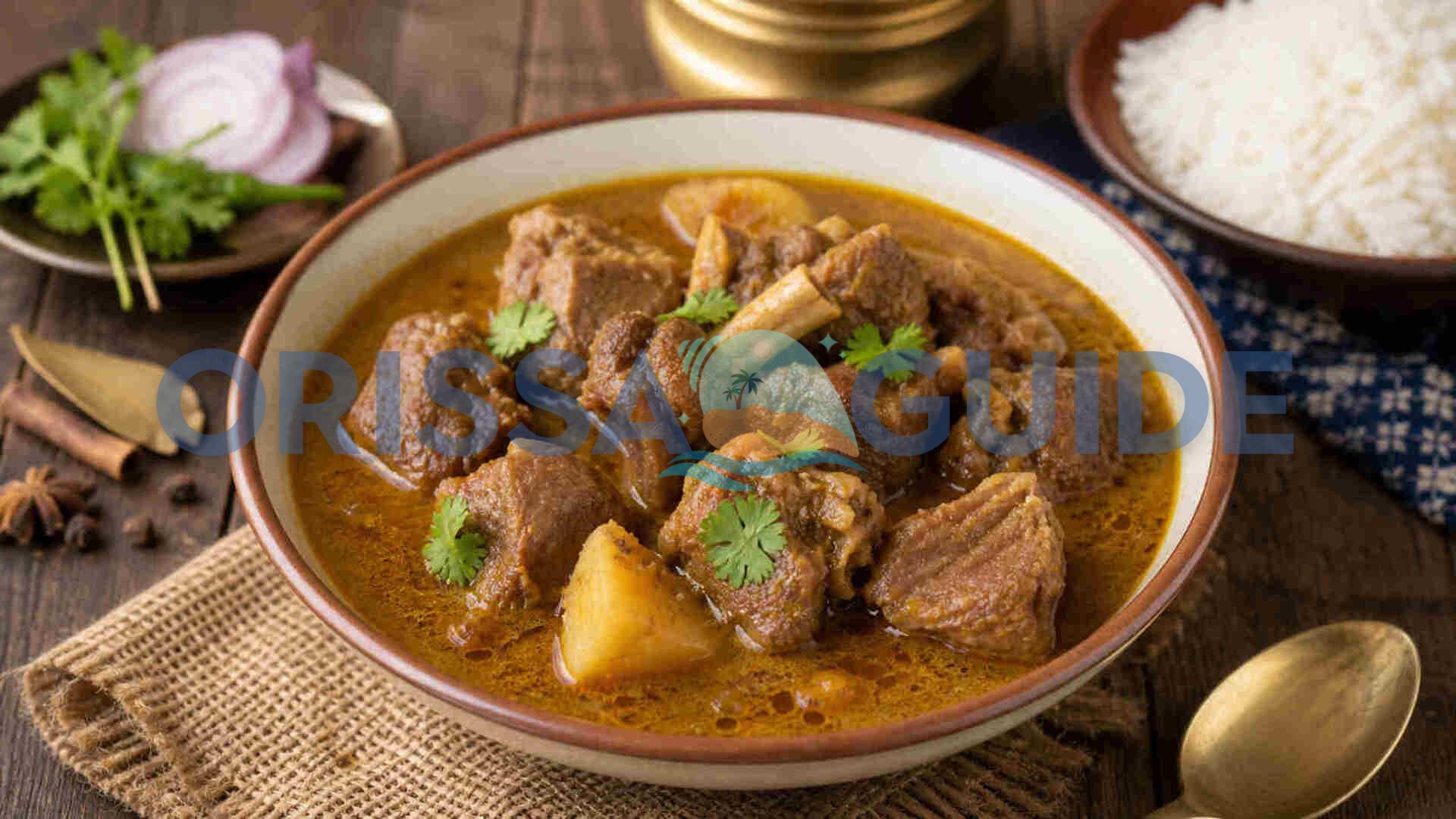
At its core, Khasi Manso Jhol is a traditional Odia curry made using goat meat, cooked in a light, aromatic broth. The name itself breaks down the essence of the dish:
- Khasi refers to goat (mutton)
- Manso means meat
- Jhol indicates a thin, soup-like gravy
But beyond this simple definition lies a deeper culinary identity.
This dish is characterized by its delicate balance of flavors, where no single ingredient dominates. The spices are subtle, the gravy is light, and the cooking method is slow and deliberate. The aim is not to create a bold, spicy curry, but to allow each ingredient to contribute gently to the overall taste.
A Distinct Approach to Cooking Meat
In many Indian cuisines, mutton is often cooked with heavy masalas, fried onions, and rich gravies. However, Khasi Manso Jhol takes a completely different approach:
- It uses minimal oil, making it lighter on the stomach
- It avoids overpowering spices, keeping the flavors clean
- It relies on slow cooking, allowing the meat to become tender naturally
A Reflection of Everyday Cooking
This dish is not reserved only for festivals or special occasions. In fact, it is commonly prepared as part of regular meals in Odia households. Its simplicity makes it accessible, while its flavor makes it memorable.
Why Khasi Manso Jhol Stands Out
What makes Khasi Manso Jhol truly special is not just its taste, but the philosophy behind it. It represents a style of cooking that prioritizes balance over excess and quality over complexity.
Light Yet Deeply Satisfying
One of the most striking features of this dish is its lightness. Unlike thick gravies that can feel heavy and overwhelming, Khasi Manso Jhol has a thin, soupy consistency that feels comforting and easy to digest.
This makes it ideal for:
- Everyday meals
- People who prefer less oily food
- Those looking for a healthier alternative to rich curries
Despite its light texture, the dish is incredibly satisfying. The slow cooking process allows the flavors to develop gradually, creating a broth that is rich in taste without being heavy.
Emphasis on Natural Flavors
In this dish, the focus is firmly on the natural taste of mutton. The spices are used sparingly, not to mask the flavor but to enhance it.
This approach results in:
- A cleaner, more authentic taste
- Better appreciation of the meat’s quality
- A balanced flavor profile
Each spoonful carries the essence of slow-cooked meat, infused with mild spices and aromatic undertones.
Minimal Use of Oil and Spices
Modern diets often emphasize reducing oil and processed ingredients, and Khasi Manso Jhol aligns perfectly with this philosophy.
Compared to other mutton curries:
- It uses significantly less oil
- It avoids heavy cream or butter
- It relies on natural ingredients
This makes it not only delicious but also more suitable for regular consumption.
Cultural and Emotional Significance
Food is often tied to memory, and Khasi Manso Jhol holds a special place in the hearts of many Odias.
It is:
- A staple in family meals
- A dish associated with comfort and warmth
- A reminder of home for those living away
The aroma of this curry cooking in the kitchen often brings back memories of childhood, family gatherings, and shared meals.
Ingredients Required for Khasi Manso Jhol
The ingredient list for Khasi Manso Jhol is refreshingly simple, yet each component plays a crucial role in building the dish’s flavor.
Mutton: The Star Ingredient
The quality of mutton directly impacts the final taste.
- Bone-in pieces are preferred as they release marrow
- Fresh meat ensures better texture and flavor
- Medium-sized cuts cook evenly and absorb spices well
Base Ingredients
Onions, tomatoes, ginger, and garlic form the base of the curry.
- Onions add mild sweetness and depth
- Tomatoes provide slight tanginess
- Ginger and garlic enhance aroma and digestion
These ingredients are used in moderation to keep the curry light.
Whole Spices
Whole spices are essential for creating aroma without overpowering the dish.
- Bay leaf
- Cinnamon
- Cardamom
- Cloves
These spices release their oils slowly during cooking, infusing the curry with subtle fragrance.
Ground Spices
Only a few basic spices are used:
- Turmeric for color and health benefits
- Cumin for earthy flavor
- Coriander for mild sweetness
The limited use of spices ensures that the dish remains balanced.
Optional Additions
Potatoes are often added to:
- Increase volume
- Add natural sweetness
- Absorb flavors
Fresh coriander leaves are used for garnish, adding freshness.
Step-by-Step Recipe to Make Khasi Manso Jhol
Cooking this dish is a process that rewards patience and attention to detail.
Step 1: Marination
Marinating the mutton with turmeric and salt is a simple yet important step. It helps:
- Remove any raw smell
- Enhance the natural flavor
- Prepare the meat for cooking
Letting it rest allows the seasoning to penetrate deeper.
Step 2: Heating the Oil and Spices
Mustard oil is heated until it reaches its smoking point, which reduces its sharpness and enhances flavor.
Whole spices are then added, releasing their aroma and creating the base of the curry.
Step 3: Building the Base
Onions are sautéed until soft, followed by ginger, garlic, and tomatoes.
This step is crucial as it forms the foundation of the dish. However, unlike other curries, the ingredients are not heavily browned.
Step 4: Adding Spices
- Dry spices are added carefully, ensuring they do not overpower the dish.
- Cooking them briefly helps release their flavors without making the curry heavy.
Step 5: Cooking the Mutton
- The marinated mutton is added and mixed well with the base.
- This step allows the meat to absorb the flavors before liquid is introduced.
Step 6: Slow Cooking
Water is added to create the broth, and the dish is cooked on low flame.
Slow cooking:
- Breaks down tough fibers
- Enhances tenderness
- Deepens flavor
This is the heart of the recipe.
Step 7: Final Simmer and Garnish
- The curry is allowed to simmer until it reaches the desired consistency.
- Fresh coriander is added for a finishing touch.
Tips to Make Perfect Khasi Manso Jhol
- Always cook on low heat for better flavor development
- Use fresh ingredients for authentic taste
- Avoid overcooking spices
- Let the curry rest before serving
These small details make a big difference in the final outcome.
Variations of Khasi Manso Jhol
Potato-Enriched Version
Adding potatoes is a traditional practice that enhances both taste and texture.
Pressure Cooker Method
For modern kitchens, a pressure cooker offers convenience without compromising much on flavor.
Spicy Variation
Adding green chilies introduces a gentle heat without altering the dish’s essence.
Traditional Wood-Fire Version
Cooking over firewood adds a smoky depth that elevates the dish to another level.
Nutritional Benefits of Khasi Manso Jhol
This dish offers a balanced combination of taste and nutrition.
High in Protein
Supports muscle repair and overall strength.
Rich in Essential Nutrients
Provides iron, zinc, and B vitamins.
Lower in Fat Compared to Rich Curries
Minimal oil makes it easier to digest.
Balanced Meal
When paired with rice, it becomes a wholesome meal.
What to Serve with Khasi Manso Jhol
The simplicity of this dish pairs beautifully with equally simple sides:
- Steamed rice
- Pakhala Bhata
- Dal
- Light vegetable dishes
These combinations enhance the overall meal experience.
Conclusion
Khasi Manso Jhol is more than just a recipe—it is a reflection of Odisha’s culinary philosophy. It teaches us that food does not need to be complex to be meaningful. Sometimes, the simplest dishes leave the deepest impact.
With its light broth, tender meat, and balanced flavors, this dish continues to hold a special place in kitchens and hearts alike.